


 At first I thought I had three books from the 26th to report on, but one turned out to not be a debut and another turned out to not be speculative fiction. So THUNDERER (USA, Canada, UK) by Felix Gilman is the last book on my 2007 debut calendar.
I'm rather intrigued by the cover, even though it's flashier than I'm used to in fantasy art. The airship is cool, and the guy flying outside of the airship is even more interesting, especially with the bird hovering near his left arm. Click on the picture to see a close-up; there's some sort of blur under his feet. Did he leap? Is he actually flying? Maybe the blurb will tell for sure:
. . . Arjun arrives in Ararat just as a magnificent winged creature swoops and sails over the city. For it is the day of the return of that long-awaited, unpredictable mystical creature: the great Bird. But does it come for good or ill? And in the service of what god? Whatever its purpose, for one inhabitant the Bird sparks a long-dormant idea: to map the mapless city and liberate its masses with the power of knowledge.
As the creature soars across the land, shifting topography, changing the course of the river, and redrawing the territories of the city’s avian life, crowds cheer and guns salute in a mix of science and worship. Then comes the time for the Bird’s power to be trapped—within the hull of a floating warship called Thunderer, an astounding and unprecedented weapon. The ship is now a living temple to the Bird, a gift to be used, allegedly, in the interests of all of Ararat.
Hurtled into this convulsing world is Arjun, an innocent who will unwittingly unleash a dark power beyond his imagining—and become entangled in a dangerous underground movement that will forever transform Ararat. As havoc overtakes the streets, Arjun dares to test the city’s moving boundaries. In this city of gods, he has come to search among them, not to hide. . . .
Gilman's website includes a tongue-in-cheek (I hope) bio and a blog. I also found a short book trailer on You Tube. Robert over at Fantasy Book Critic absolutely raves about Thunderer, calling it a possibility for the best debut of 2008. Already! Over at SFSite, Jeff VanderMeer has an interview with Gilman, plus an excerpt. You can also see the excerpt at the publisher's site. Jeff also had some words of praise for Gilman at his blog. The Agony Column has a podcast interview (mp3 link) with the author plus a review.
Saturday, January 5, 2008
THUNDERER by Felix Gilman

Friday, January 4, 2008
AURALIA'S COLORS - Final Post
While this is my final official post on AURALIA'S COLORS, that doesn't mean that I might pop up with another post on it in the future. Books like this tend to stay on my mind for weeks. When I wrote about David Anthony Durham's Acacia, I ended up putting up another post on it a week after my so-called "final" post. So you never know. I'm flighty that way.
I finished this book on New Year's Eve, some 2 1/2 months after I started. However, that was not the fault of the book. I had some author-sent books to read, and I wanted to get through them first.
This novel is difficult to summarize. It begins when a young female baby is discovered by a pair of outcast "gatherers". The baby has been placed carefully into the impression of a monstrous footprint. Almost like it was a cradle. The Gatherers who find her are outcasts of House Abascar, criminals who serve there time by living outside the protective walls of the house.
Paradoxly, these outcasts live outside, where there is the color of nature, while inside the house, the housefolk must earn the right to wear colors. Why? This scheme is the brainchild of Queen Jaralaine, who seeks to restore the glory of House Abascar. To do so, she declares the Proclamation of the Colors. During a period of Abascar's Winter, the housefolk must wear drab colrs and sacrifice everything beautiful to the throne. After sufficient sacrifice is made and enough beautiful things gathered, the colors will be restored in Abascar's Spring.
However, the Queen -- who has a tendency to wander -- disappears before she can declare Abascar's Spring, and King Cal-marcus never declares the Spring. Twenty colorless years go by.
Then, along comes Auralia, a weaver of fabulous things, things that bring hope to the wearer, and even, it is said, things that can heal.
The author, Jeffrey Overstreet, breaks a lot of "rules". He doesn't give us a lot of behind-the-eyeballs time with the title character, Auralia. At the same time, he puts us in a fever to read about her. The POV jumps from person to person, here the heroic/villianous Captain Arc-robin, there the nameless ale boy, here the king, Cal-marcus, there his son, Cal-raven. But somehow, I don't mind -- at least not after the opening chapters.
The author also yanks us out of the present just when it is getting interesting, and plunges us into the past to the schemings of a most unpleasant character, Queen Jaralaine through the eyes of the intriguingly complex Captain Arc-robin.
And then there is the ale boy, whom I tended to dismiss at first because he had no name. Even when he does learn his name, the reader does not. Grr. This is really the only quibble I have with the novel. People tend to get named, at least in Western cultures. Nothing in this book suggested that it was anything other than a quasi-Western culture. I am reminded of the Dog Boy in T. H. White's The Once and Future King. The poor Dog Boy didn't have a name either, but at least his designation got capitalized letters.
However, I cannot help but feel that the author kept his name from us because it might give something about him away. I cannot ignore the imagry behind some of the names in this novel. Auralia sounds very much like Aurora, which is the Latin word for dawn. This is a very apt name for her. Dawn is a burst of colors and light, just as Auralia is.
Color is the defining theme of this novel. Overstreet seeps his world in color, but only -- or so it seemed to me -- when Auralia is present. Everything is brown and drab and grey, but when Auralia comes along, she paints the world in her wake. This scene at the top of the cliff -- the subject of the cover art -- was the most unforgettable scene in the novel, even though I hardly understood what was happening.
After the cliff scene, I had a very difficult time putting the novel down. Auralia brings colors to Abascar, but she also brings a lot of trouble to herself. Mythical creatures mentioned throughout the book -- the Northchildren and the Keeper -- gradually become more real to the reader in what really is masterful storytelling. Nothing was a surprise, yet the way everything unfolded certainly could not be predicted.
Many questions are left unanswered in this, the beginning of a series. However, the book ended after a cataclysmic climax, and it had an epilogue I did not expect.
As I said in my year-end round-up, this book has a sense of wonder that I don't often see in fantasy these days. All too often these days, authors strive for gritty realism. We rarely get moments like that first glimpse of Rivendell in The Lord of the Rings, or when Lancelot performed his miracle in The Once and Future King, or when Silas found his gold in Silas Marner. The wonder in this novel was in Auralia's colors. It is a well-named book, and I look forward to reading the next installment, Cyndere's Midnight. Hmm. Is it a coincidence that Auralia's name is very like Aurora from Sleeping Beauty, and Cyndrele's name is very like Cinderella? Time will tell.
Links!
All my posts on AURALIA'S COLORS
All my posts on Jeffrey Overstreet (may overlap with the above)
Jeffrey Overstreet's Website and blog
Amazon Links - USA, UK, Canada
Novel page at Waterbrook
Fantasy Debut Nominated!
While looking at Pat's nomination for the Preditors and Editors annual poll, I discovered that Fantasy Debut was nominated for this award as well! I'm kind of overwhelmed at the company that this blog is in. And, I must admit that I'm thrilled!
Here is the poll for review sites. The deadline for voting (or nominating other sites) is January 15th.
Wednesday, January 2, 2008
Interview With Janet Lorimer!
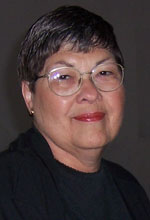 I featured Janet Lorimer's MASTER OF SHADOWS last month. I first announced her novel in November (along with some others), and then she did a guest post. Then in December, I blogged on it several times as I read it.
I wanted to interview Janet because she has been a published author of children's books since the 80s, and I don't often get the chance to interview experienced authors. Also, I found her background as a freelance writer interesting. She truly makes her living with the written word, in areas both glamorous and distinctly not!
FD: Please tell us about your inspiration for MASTER OF SHADOWS.
JL: Without giving too much of the story away, I actually wanted to write a novel using a werewolf as the protagonist. This was back in the late ‘80s and the idea of vampires as sympathetic characters was just barely taking hold. I thought a werewolf hero would be interesting. I always do copious amounts of research – much more than I ever need – before I start writing anything, so I began reading everything I could get my hands on regarding werewolves. That led me down another path and that branched into something else and so on. The story grew from there.
FD: MASTER OF SHADOWS is very much a fairy tale for adults, inspired by both Beauty and the Beast and The Elephant's Child by Rudyard Kipling. Do you have any plans to run with the idea and write other stories based on other fairy tales? Or did I just give you the idea?
JL: I must confess that Beauty and the Beast was always my favorite fairy tale. And if you notice, the Beast – not the handsome prince – was very, very popular when the Disney version was released. But no, I don’t have plans to write anything else inspired by fairy tales. However, having said that, I don’t rule out the likelihood of referring to other children’s classics when I write. One of my horror stories – Last Echoes – appeared in Women of Darkness II, an anthology edited by Kathryn Ptacek in 1990. Throughout the story I referenced nursery rhymes. (By the way, Kathryn edits a wonderful marketing guide – The Gila Queen’s Guide to Markets.) I love referencing favorite stories I’ve enjoyed, especially the children’s classics.
FD: MASTER OF SHADOWS is also a stand-alone novel. Can you tell us about any other adult novels that you have in the works?
JL: The novel I finished in 2007 and am currently trying to market – The Visitant -- is a romance with a paranormal element. Unfortunately, it doesn’t fit what Juno is currently looking for, so that’s why it’s being shopped around.
The book I’m working on right now –Deadly Illusions – is a mystery with an element of the paranormal.
After that I’m very tempted to delve back into a juvenile novel again. I have four children’s books coming out in 2008. James A. Rock & Co., Publishers is publishing them. They include the reprints of three children’s books that were originally published by Scholastic. Two are juvenile novels for readers ages 9 – 12; they are The Mystery of the Missing Treasure and The Mystery of the Haunted Trail. The third one is an early chapter book for readers 6-8 entitled The Trouble With Buster. The 4th book that’s being published is a new juvenile novel entitled The Ghost That Wasn’t Dead.
FD: Unlike most of the debut authors I've featured here, your bio is quite extensive. Please tell us a bit about your writing career.
JL: I decided I wanted to be a writer when I was about 5 years old, and had just learned to read. When I found out that people actually wrote the stories I was reading, I knew that was what I wanted to do. Of course I wrote and wrote as I grew up, but I didn’t actually start writing with the intent of getting published until I was in my 30s. By then I also had two small children. I began with a novel, probably the hardest thing for a beginning writer to write and yet I think many of us do begin with novels. I did finish it and believe it or not, in due course I found an agent who even found a publisher. I was beginning to think that this writing and publishing thing was going to be a slam-dunk, but Fate stepped in and the publisher went bankrupt. The manuscript – for a gothic novel – didn’t find another home. It’s still in a box! And when I read bits and pieces of it, I wince. I had a lot to learn about writing back then.
After that I decided to try writing shorter pieces – articles and short stories. Eventually I got an article published in a local magazine, and then after a period of time I sold my first children’s story to Highlights For Children. I actually sold four stories to Highlights, but they have only published two. They buy all rights, so I can’t try to market the ones that never saw the light of day. A good lesson about the rights we sell, but as a beginning writer I was so hungry for those publishing credits, I didn’t mind.
One type of writing that fascinated me was high/low writing. High/low stands for high or adult interest/low reading level materials. These are designed for reluctant readers in middle school and high school, for adults in ESL (English As A Second Language) classes, and adults in literacy classes. The stories are usually genre stories (such as science fiction or mystery), and the characters are young adults or adults. You use a lot of dialogue; there is no sex of any kind – explicit or otherwise – and no gratuitous violence. Sentences are kept either simple or compound, but almost never complex. Believe it or not, you use no more than 20 words in a sentence, and, yes, I have been known to count the words in sentences when I wasn’t sure. The vocabulary is somewhat simple; you generally stay away from three syllable words. For example, you would chose “enough” over “sufficient.” The story needs to start with a bang and you have to tell a good story. They are a fantastic challenge, and I think they are a lot of fun to write.
I finally got my first opportunity to do some high/low writing when I read in a writer’s magazine that Fearon Education was looking for high/low fiction. I wrote to Fearon for their guidelines and submitted a story entitled Tomb of Horror. I was stunned when they bought it. After that I began to write regularly for them. When Fearon sold out to Lake Publishing, I continued to write high/lows, and when one of the editors I worked with at Lake began working with Saddleback Publishing, I dutifully followed along. It’s been wonderful fun, and will always be a favorite kind of writing.
Once I learned how to write high/lows, I was able to market this skill in other ways. For example, the local community college needed someone to revise materials used to teach non-credit classes. I was able to revise materials on different jobs in the hotel industry, on golf course maintenance, and also the Commercial Driver’s License (CDL) manual. I co-wrote a state tour guide manual, and revised a report on violence against women.
In the meantime I sold a few short stories for adults, and an abundance of articles. I also began teaching writing classes in the non-credit program at the community college. Then, for a period of time, I burned out. It felt like I was always hustling for the next job. So I took a job with a regular paycheck, working for a non-profit company – an active railroad museum. I also took over the writing and editing of their newsletter since no one else wanted to do it. Today, 15 years later, I’m still writing their newsletter, although I left the company when we moved to Arizona.
FD: What made you decide to strike into adult fiction after spending years writing for children?
JL: I never did devote myself to just one or the other. But I seemed to be able to write more successfully for children. I’m not sure why except that I was reading a lot to my own children, so I really knew what was going on in the wonderful world of ‘kiddie lit’ as we used to call it.
I wrote MASTER OF SHADOWS over 15 years ago, in the early ‘90s. I wrote it when I was revising that CDL manual. By day I wrote about driving a truck, but to keep myself sane, I began writing the novel at night. I really wrote it for myself, but once I was done with it I realized I had a good story. My agent couldn’t sell it, however, because it was a cross-genre story. It had elements of mystery and romance with a little fantasy and horror thrown in. One editor wrote in her rejection letter that the story moved like the wind, but…. They really didn’t think their women readers would like the hero, Louvel, because he was not a typical handsome prince type of guy.
So into a box the story finally went. A few years ago I found another publisher online. They, too, loved the story, but guess what? Before the story could be published, the publisher went bankrupt. Hmm, shades of déjà vu!
Then I read about Juno Books in The Gila Queen’s Guide to Markets. When I read Juno’s guidelines, I remember thinking, “Do I really want to try this market? Do I really want to go through this again?” I finally decided that the worst thing that could happen would be another rejection, so why not give it a try? I did! And when Paula Guran e-mailed me to say that she liked the submission package and wanted to buy the manuscript, I almost fell off my chair! I don’t think I really, truly believed it would happen until the day I actually held a copy of MASTER OF SHADOWS in my hand!
FD: What is the most positive change you have seen in the publishing industry since you started your career?
JL: I think the most positive change is the advent of computers and the Internet. I began writing (boy, here I go dating myself) on a typewriter. That meant we used a lot of whiteout and you learned pretty quickly to be a very good typist and make few mistakes. But it was so time-consuming. Also, if you wanted to do research, you had to go to the library, which I actually adore doing, but again, it’s very time consuming. Now, thanks to the Internet, I can do research on line, I can find publishers’ guidelines on line, I can e-mail materials to publishers and they to me. That saves a lot of money in postage fees. But I will also confess that I am still very new to the wonderful world of the Internet, still learning to use this magnificent tool.
FD: How about the most negative change?
JL: I think the most negative change is that the big, big publishing companies are so impersonal. They won’t look at unagented submissions. And many agents are just not taking on new writers as clients.
Hey, I don’t have an agent now either! My wonderful agent was Laurie Harper of The Sebastian Agency who is still a dear friend and who does great work with contracts, but she finally decided not to pursue the selling of fiction. Her area of expertise is business writing and she’s had great success in marketing business books. But that left me agentless, and when I tried to find an agent, my experience didn’t count for a darned thing.
I think the sad thing about this state of affairs is that there are many exciting writers coming along who can’t get an agent because they don’t have a lot of publishing credits, and most of the big publishers won’t look at their work unless they have an agent. It’s a catch-22.
However, the good news is that there are still an impressive number of good publishers who are still looking for good writers and you don’t need an agent to submit to them.
FD: Do you write full-time or do you have a day job?
JL: I have a part-time day job that is a ton of fun! I work for a small plumbing company and my job is mainly answering phones and scheduling the plumbers. In the summer, it gets mighty quiet in this town with most people going to cooler climates, so my employers let me write at work when things get slow. Oh, yes, I do know how lucky I am. They think it’s quite amusing that they have a published author advising people about leaky toilets.
FD: You also work as a freelance writer. What sort of work do you do and how does it differ from regular nonfiction, such as magazine article sales?
JL: To me, a freelance writer is one who does not have an employer but one who is self-employed. So, as I mentioned earlier, as a freelancer, you are always hustling, always trying to sell. When you finally get some regular clients, things are a bit easier.
I have gotten regular work from Saddleback Publishing, for example. The editor would call me when they needed writers for one series or another. For example, a couple of years ago, another of their regular writers and I wrote five non-fiction books in Saddleback’s Strange-But-True series. The stories were such incredible fun to research and write. I wrote about everything from the Jersey Devil and Extraterrestrials to Cancer Sniffing Dogs and the Mutter Museum.
And, as I mentioned earlier, I also write and edit a bi-monthly newsletter for the non-profit company I used to work for, the Hawaiian Railway Society.
Every now and then I’ll find a market that sounds interesting, and I’ll either send them a manuscript that hasn’t found a home or I’ll be inspired to write something new.
FD: Are you planning any additional publicity for MASTER OF SHADOWS? Conventions? Websites? Or even a blog?
JL: Here’s where I get to confess how technically impaired I am. In fact, if it weren’t for Carole Mc Donnell, author of Wind Follower, I wouldn’t even know how to blog. But thanks to Carole’s patience and persistence, I finally figured out how to post a blog (hey, six months ago I wasn’t even sure what a blog was).
My youngest daughter, Marnie, has been helping me find ways to promote MASTER OF SHADOWS. Thanks to her efforts, I now have a quarter-page full color ad and a review of the novel scheduled to come out in either the March or April issue of Romantic Times Book Reviews. And in April, I plan to be at the RTBR convention in Pittsburgh. They are offering a lot of workshops on e-publishing and e-publicizing, and I plan to take advantage of as many of those workshops as I can.
Marnie has also decided I need a Website, so that’s in the offing, and she’s trying to find new places for the book to be reviewed. She’s promised to set up book signings in northern Virginia where she lives. Locally, I have a book-signings coming up where I live.
And then, of course, the whole thing starts again when the children’s novels are published this year. But that’s another story!
Thank you!!
Tuesday, January 1, 2008
Happy New Year! Plus, Some Resolutions!
Best wishes to all for a happy and prosperous New Year!
My Fantasy Debut resolutions: to at least mention all books read, whether fantasy or not, and whether debut or not. I read lots of stuff that is neither fantasy nor debut, and all good books deserve some coverage. Also, I will endeavor to showcase one debut per week.
Read on to the next post for my Favorites of 2007!
Monday, December 31, 2007
2007 Favorites
On this, the last day of the year, I thought I'd reflect on the debuts that I read since I started Fantasy Debut. Rather than attempting to rank a list of favorites, I came up with some stand-outs in several areas. Several debuts appear more than once.
The creatures in Thief With no Shadow by Emily Gee
The Princes of the Golden Cage by Nathalie Mallet
Favorite Male
Joby in The Book of Joby by Mark J. Ferrari
Friday, December 28, 2007
Across the Face of the World by Russell Kirkpatrick
According to Amazon, ACROSS THE FACE OF THE WORLD (USA, Canada, UK) by Russell Kirkpatrick does not release until January 1, but since I saw it in Book-a-Million the other day, I thought I might as well announce it. I have a copy, courtesy of Orbit books, and I plan to start reading next week. Since it is a rather lengthy tome (736 pages), I have lined up several guest reviewers who will hopefully be able to put up some reviews in the meantime.
From a tiny snowbound village, five men and women are about to embark on a journey that will change their lives -and the destiny of their world.For two thousand years, since he was cast out from Dona Mihst, the fabled Undying Man has been plotting his revenge on the Most High. The Destroyer's plans of vengeance are nearing fruition-and he will allow nothing to stand in his way.But one man has escaped from the Destroyer's prison, and even though the Lords of Fear ride in pursuit, he will bring word to his people. It will be up to his sons, Hal and Leith, together with a small group of villagers, to warn their world of the coming war.
It sounds fairly exciting, but the reviews I've seen so far have been mixed. Robert at Fantasy Book Critic and John at Grasping for the Wind were both ambivalent, but they ultimately found it too geography-intensive. We'll have to see if I agree.
The author keeps a blog at his website. As a professional geographer, he has worked on several atlas projects. You can see his Australia cover at his website, and I like it much better than the UK/USA/Canada cover. The author has an older website here, and while it is dated, it has lots of maps!
I have to admit that the very title of this novel is somewhat intimidating. Sometimes I really like quest novels, but other times it seems like I am forced to watch while the main characters go about every second of their lives while on the road. I have no problem at all when an author says, "three weeks later, they arrive" rather than make me live through page after page describing those three weeks. From what I'm reading on Robert and John's blogs, I may be in for some agonizing scenes. However, I'll try to read with an open mind. This book is coming at a good time for me, because it has been a long time since I've read a quest novel.
Wednesday, December 26, 2007
Debut Coverage Elsewhere
I constantly accumulate links to other debut coverage in the sidebar to the left, but every couple of weeks I like to call attention to debut news and reviews on blogs elsewhere. Here's the latest round-up.
Thunderer by Felix Gilman releases today, but Robert is way ahead of me, as usual, with his review. He's already mentioning it as a possible favorite for 2008!
SMD has reviewed another small press novel over at The Fantasy and SciFi Lovin' Book Review. This one is The Longevity Thesis by Jennifer Rahn and he gives it mostly high marks.
Mark Rose over at Bookgasm is somewhat mixed in his review of Interred with Their Bones by Jennifer Lee Carrell.
Over at Grasping for the Wind, John seems to have enjoyed Rosemary Jones's Crypt of the Moaning Diamond. Rosemary also offered me this novel, but at the time, I was booked. I'll probably go ahead and pick it up on my next bookstore trip; John makes it sound fun.
Lawrence over at the Gravel Pit is not wild about Brian Francis Slattery's Spaceman Blues: A Love Song. He calls it the weirdest book he read in 2007.
The prolific Robert has mixed feelings about Across the Face of the World by Russell Kirkpatrick. This is up next on my reading list so I'm feeling a bit of trepidation.
To end on a more positive note, Pat at the Fantasy Hotlist was quite happy with The Devil You Know by Mike Carey. He makes it sound like it might be more my cup of tea than I thought it would be.
I'm expecting two guest reviews in upcoming weeks, plus two interviews (one which I still have to actually write). I should be done with Auralia's Colors in the next day or so. Once I finish it, I'll post my favorites of 2007 list.
Saturday, December 22, 2007
AURALIA'S COLORS - Plot Threads
I am just over halfway through Auralia's Colors by Jeff Overstreet. Now that I no longer have any other novels competing with it, I should be able to get along much quicker.
It's difficult to summarize this book. The people of House Abascar live under oppression. All things with color must be given as gifts to the king, and the people can only wear drab clothing. The exceptions are favored ones of the house, who can earn various colors. The Queen of House Abascar declared that this time of no colors would be the Winter of Abascar, and it would remain Winter until she declared that it was Abascar's Spring.
Except the Queen has since disappeared, and the Winter has dragged on for two decades.
Into this House comes Auralia, who has a gift with weaving colors from things found in nature. Another key character appears to be the ale boy, who has no name that he knows. Auralia says that she knows his name, but she cannot pronounce it. Anyway, the ale boy has a way with fire. An exiled mage has a gift with stone. And the Captain of the Guard, Arc-robin, who enforces all of the King's edicts, seems to key into the story in a significant way.
Despite its somewhat leisurely opening, this novel is shaping up to be very good.
Thursday, December 20, 2007
To Catch a Mermaid by Suzanne Selfors
 I've been meaning to post my thoughts on TO CATCH A MERMAID by Suzanne Selfors for some weeks now. I don't usually read children's novels and I probably will demur in the future, except for young adult. I did my homework on this novel and read a bunch of other reviews out there, and none of them are in the least bit negative.
The writing itself is great. It's about a boy named Boom Broom who brings home a wild baby mermaid (actually more like a toddler) from a reject seafood bucket. The merbaby brings a curse that Boom must break in order to save his sister. The merbaby can also grant wishes. His sister promptly falls in love with the cranky merbaby, and refuses to be parted from it. Adding angst to the story is that before the start of the novel, Boom's mother was carried away by a twister. Boom is an appealing character, despite his struggles with greed. There is almost no violence in the book.
The beginning of the novel is quite humorous, with crazy situations such as Boom's sister Mertyle wishing for some buttery corn, then Boom going outside and presto! The field next door is filled with buttery corn growing on the stalk, ready to eat. Mertyle cannot seem to wish for anything practical, but there doesn't seem to be any limit to her wishes, so why should she bother?
The high point of the story comes when Mertyle contracts ich from the merbaby. Anyone who has ever kept a fish knows about fish ich, which is spelled ick in this book. For a while it is quite funny, but after this part, the book took a turn for me. I realize that Boom was concerned for his sister, but from then on, the story was too much of a downer, in my opinion.
One problem that authors have in writing children's lit is how to separate the child from the parent. It must be done, because any responsible parent would prevent their child from having dangerous adventures. Harry Potter and Tom Sawyer were both orphans. Huck's father was a drunken drifter. Many children's novels simply take place in boarding schools. In this novel, Boom just can't count on the important people or institutions in his life, including:
• His father, who developed agoraphobia after the twister carried away Boom's mother, and keeps himself locked in the attic in case another twister comes. He does manage to bestir himself toward the end and help his children, but he's never exactly inspiring.
He announced that the twister would return, then he locked himself in his attic studio and asked for weather updates through the keyhole. Except for his dashes to the bathroom, or an occasional appearance in the kitchen to obtain something to eat, he had rarely been seen since. The world beyond the front porch had proven itself to be unpredictably dangerous, and Mr. Broom had decided to avoid it entirely.
• School, for the principal is a sadistic meanie who is so keen to catch kids getting in trouble that she keeps a telescope in her office so she can spy on the kids in the playground. However, I'm willing to give the author a pass on this one, because mocking schoolteachers has a long and glorious tradition in kid's lit, possibly beginning with The Adventures of Tom Sawyer.
• The Church, which was so awful that Boom cannot dredge up a single positive memory of his dead mother taking him church.
He knew that Winger would be at church, suffering through a long, boring service in a starched-up shirt and a tie. Then he'd sing off-key in the choir's back row. Boom used to go to church with Mrs. Broom. She always stuffed her purse with hard candies, to help Boom get through the blah, blah, blahs that never made much sense. Why was everyone so worried about the next life when there was so much to worry about in this one?
• God, who doesn't seem answer prayers. However, Thor might.
"All Mighty Thor, God of Direct Viking Descendents, show us your mercy and send us wind."
Mr. Jorgenson stood and raised his arms.
"Help us, Mighty Thor."
Boom didn't care who answered their plea -- be it a Viking god, the god of Winger's church, or a green menace from the sea. Was it too much to ask for the universe to look kindly upon him just one time? One stinking time?
The people who do help Boom include the oddball members of the Sons of the Vikings, a flaky fish store owner and the fisherman who let Boom rummage in his fish bucket. It's meant to be whimsical, I think. Most of the other adults are greedy, apathetic or just plain evil.
If I had read this when I was twelve years old, that quote about the afterlife would have really bothered me. Why would you want to bring angst to the child of a Christian family? (I'm assuming the author was writing about a Christian church, since the description fits Christian churches.) Do you write for children because you love them, or do you have other reasons? The prayers to Thor bothered me as well, but at least it fit into the whole "Sons of the Vikings" storyline. The anti-church/afterlife statement sort of came in out of nowhere. It seemed like editorializing to me. If I had been reading for pleasure, it would have been the point at which I would have put the book down.
It is possible, I suppose, that the author was merely careless and meant no harm. The second book (for there appears to be room for a sequel) will tell if this is so, if any more such statements appear.
That's not the only thing that bothered me about this novel. We all hear laments about the decline of reading in children. If this book represents today's children's literature, then I can only say, "Who can blame them?" This book was hard to get through. There's no rousing adventure, little that uplifts. The final struggle dragged on and on and was filled with despair. The ending, while happy enough, was more of a relief than anything else. Even Shrek was more uplifting than this novel. The theme in Shrek is the classic beauty lies within story. The theme for this novel? Maybe something like, "Life is tough, kid. Get used to it."
I spent a few weeks sitting on this review because the author was really quite lovely, and when she sent me a copy, she even autographed it. In the end, I decided to go with the adage that "a bad review is better than no review." Maybe she will find something helpful in the honest perspective of a reader who was really looking forward to this book, and who ultimately felt disappointed by it. Maybe some of you will want to purchase it in order to read it for yourself.
In any case, I have decided that in the future, I will only accept review copies from publishers or publicists. I love being in touch with authors, but I need a sense of detachment -- at least at first -- if I'm going to review their books. I have already adjusted my "about" post to reflect this policy.
